 LINGCORE SCI
Blinding in Clinical Trials: Beyond the Double-Blind Label
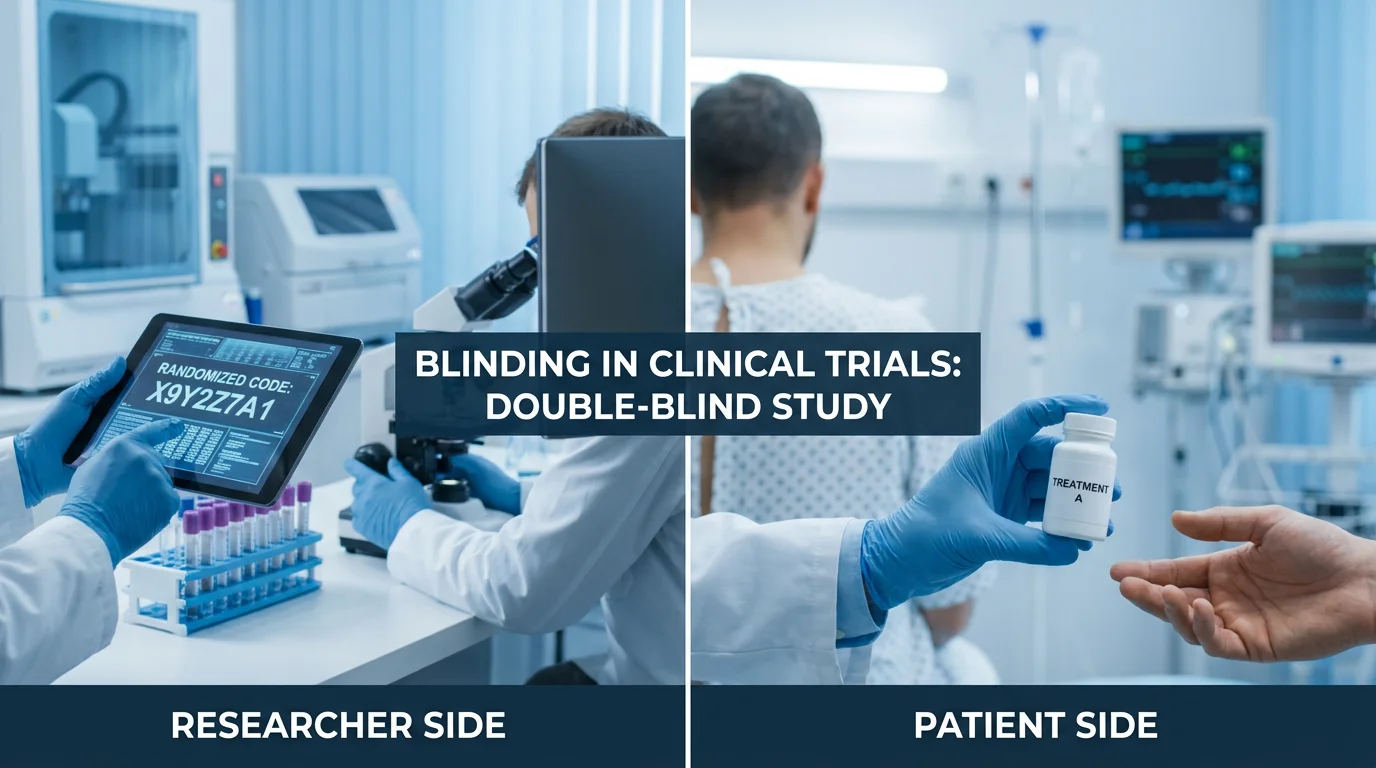
In the hierarchy of clinical research, the randomized controlled trial (RCT) remains the gold standard for establishing causality between an intervention and an outcome. However, randomization alone is insufficient to eliminate bias. The protection of a trial’s internal validity relies heavily on blinding (also known as masking)—the process of keeping trial participants, investigators, and data analysts unaware of the assigned interventions. Despite its ubiquity in protocol summaries, the operational reality of blinding is complex, fraught with challenges, and frequently misunderstood by even experienced researchers.
This comprehensive guide examines the structural importance of blinding, the critical distinction between blinding and allocation concealment, and contemporary strategies for maintaining trial integrity in the face of physiological and logistical obstacles.
1. The Fundamental Goal of Blinding
The primary purpose of blinding is to prevent ascertainment bias and performance bias. When individuals involved in a trial are aware of the treatment allocation, their expectations and behaviors can systematically skew the results. For example:
- Participant Bias: Patients receiving what they know to be an active drug may report subjective improvements due to the placebo effect, or they may adhere more strictly to the protocol than those in the control group.
- Investigator Bias: Physicians may unconsciously provide different levels of ancillary care or interpret ambiguous diagnostic findings differently based on the patient's treatment status.
- Outcome Adjudicator Bias: Those measuring the final results might be influenced by a preconceived notion of the treatment's efficacy, particularly when outcomes are subjective (e.g., pain scales, psychiatric assessments).
2. Allocation Concealment vs. Blinding: Resolving the Confusion
One of the most common errors in trial reporting is the interchangeable use of "allocation concealment" and "blinding." While both aim to reduce bias, they operate at different stages of the research timeline.

Allocation Concealment occurs before and during the enrollment process. It ensures that the sequence of randomization is unknown to those recruiting participants, preventing them from selectively enrolling patients into specific groups based on their perceived prognosis. This is a baseline requirement for any randomized trial and is almost always achievable through central randomization or opaque envelopes.
Blinding, by contrast, begins after the intervention has been assigned and continues throughout the follow-up period. While allocation concealment is a prerequisite for a valid RCT, blinding may not always be feasible (e.g., comparing surgery to pharmaceutical management). However, when blinding is possible, its failure significantly undermines the evidentiary weight of the trial.
3. Hierarchical Levels of Blinding
Trials are typically categorized by the number of "blinded" parties, though the CONSORT 2010 Statement encourages researchers to explicitly state who was blinded rather than relying on labels like "double-blind."
- Single-Blind: Usually refers to the participant being unaware of the assignment. This is common in trials where the clinician must know the intervention to administer it correctly.
- Double-Blind: Both the participant and the treating investigator are unaware. This is the standard for pharmaceutical trials.
- Triple-Blind: Extends blinding to the data analysts or the data monitoring committee. This prevents bias during the statistical analysis phase, ensuring that data cleaning and analytical decisions are made objectively.
4. The Operational Reality of Placebo Matching
Effective blinding requires the control intervention (placebo) to be indistinguishable from the active treatment. This involves more than just appearance. Researchers must consider:
- Physical Characteristics: Weight, shape, texture, and color of pills or injectable solutions must be identical.
- Sensory Profiles: For liquid medications or topicals, the taste and smell must match. A classic example is the use of Quinine in placebos to mimic the bitter taste of certain active alkaloids.
- The "Double-Dummy" Technique: When comparing two active drugs with different administration routes (e.g., a pill vs. an injection), participants in Group A receive an active pill and a placebo injection, while Group B receives a placebo pill and an active injection.

5. The Challenge of "Unblinding" Through Side Effects
Perhaps the most significant threat to blinding in modern clinical trials is the presence of distinct side effects associated with the active drug. If a drug causes a specific physiological reaction (e.g., flushing, dry mouth, or changes in heart rate), both the patient and the clinician may correctly guess the treatment assignment, rendering the blinding ineffective.
To combat this, some trials utilize active placebos. An active placebo is a substance that produces side effects similar to the drug under investigation but lacks the specific therapeutic mechanism being tested. While pharmacologically complex to design, active placebos provide a much higher level of methodological rigor in psychiatric and neurological research.
6. Blinding Assessment: To Measure or Not?
There is ongoing debate regarding whether trials should formally "test" the success of blinding by asking participants to guess their assignment at the end of the study. Proponents argue this provides a measure of trial quality, while critics, including the authors of the CONSORT Statement, argue that such tests are often uninterpretable. If a patient recovers quickly, they will naturally guess they are in the active group, regardless of whether the blinding was technically successful. Instead of testing blinding post-hoc, focus should remain on proactive structural safeguards during the trial design.
7. Blinding in Non-Pharmacological Trials
In surgical or medical device trials, blinding is notoriously difficult. Sham surgeries—where an incision is made but the therapeutic maneuver is not performed—are the most rigorous way to blind surgical trials but raise significant ethical concerns. In these cases, the focus shifts to blinded outcome assessment. Even if the surgeon and patient know the assignment, the final measurement (e.g., an MRI scan or a biopsy result) can and should be interpreted by an independent assessor who is blinded to the intervention.
Elevate Your Research with Lingcore SCI Tools
Maintaining methodological rigor is essential for publication in high-impact SCI journals. Access our specialized AI-driven tools designed to support medical researchers at every stage:
- Paper Analyzer: Get a structured methodology audit, including blinding and bias assessments, in seconds.
- Review Builder: Generate evidence-based review drafts with verified citations and rigorous thematic analysis.
- Journal Matcher: Find the perfect SCI home for your manuscript based on your study's methodology and impact.
Conclusion
Blinding is not a binary "checked box" in a protocol; it is a continuous effort to shield the study's data from the influence of human expectation. By understanding the nuances of allocation concealment, employing triple-blinding where possible, and addressing the risk of unblinding through side effects, researchers can produce high-quality evidence that stands up to the scrutiny of peer review and changes clinical practice.